

Our multi-year project supported by the Critical Ecosystem Partnership Fund (CEPF) is enabling us to extend the area of our work with local communities in and around the lowland rainforest of Andriantantely.
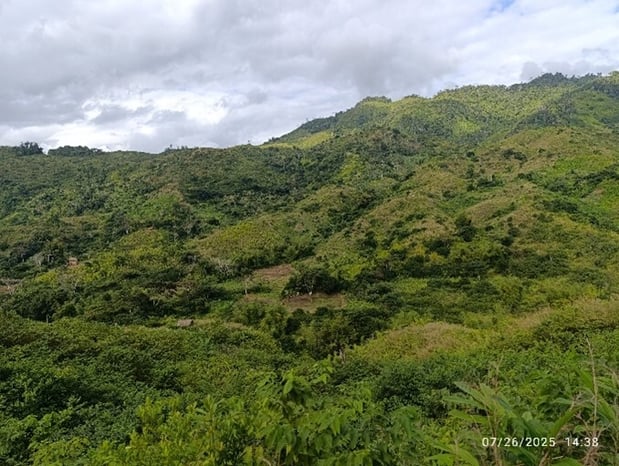
Landscape near Bezamba village © The Aspinall Foundation Madagascar
Monitoring the Ecosystem
In the early stages of the project one of the first activities was to survey the extended area and begin the process of monitoring the flora and fauna present.
The initial surveys, conducted in collaboration with local rangers, involved five areas with a total estimated forest of 2,150 hectares. Field surveys combining methods such as sampling plots and direct observation were used to provide baseline inventories, and it is hoped that further surveys in the future will add valuable data to help us monitor the health of the ecosystem and the changes that occur.
Our aim is to protect and stabilise vital habitats and the wildlife present whilst simultaneously building resilience in local communities towards the impact of climate change and to ensure their sustainable use of ecosystem services for the long-term.
Habitat Assessment
Forest degradation, to varying degrees, is present in each of the five areas assessed. In summary:
• In Vohiposa there are no longer any large trees, whilst lowland areas are densely populated with single species secondary forest
• In Andranomihoatra there is evidence of a regenerating forest at an intermediate ecological succession stage.
• In Manakana there are some large trees, and the forest also contains the bamboo species Cataryostachys madagascariensis.
• In Tolongoina the forest density is relatively low compared to other sites. Trees are sparse and the bamboo species Cataryostachys madagascariensis was only found occasionally.
• In Bezamaba the situation is better with a significant number of large trees compared to other sites, although many deforested areas were observed within the forest.
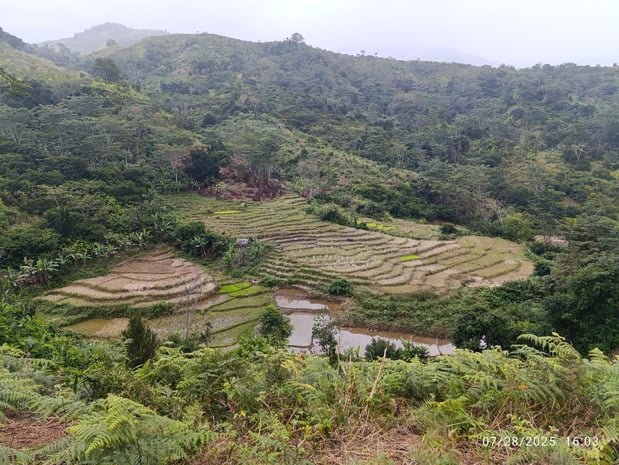
Landscape near Manevatanana village © The Aspinall Foundation Madagascar
Animals Present
Although degraded the forest areas are still home to a variety of species that are endemic, or native, to Madagascar.
Mammals observed during the survey included seven species of lemurs, including black-and-white ruffed lemurs, indri and greater bamboo lemurs, all of which are Critically Endangered..jpg?width=619&height=464&name=Indri%20(Bezamba).jpg)
Indri photographed in Bezamba © The Aspinall Foundation Madagascar
Indri are one of the largest living lemur species and they live in Madagascar’s eastern rainforests. They are known for their song, a haunting and melodic sound that reverberates around the tree canopy. To some extent they have been protected from hunting by their cultural significance as the folklore of the Malagasy people refers to the species as Babakoto, meaning ancestor, and they were thought to have a common lineage to that of humans. This belief is gradually diminishing, and they are at threat from hunting, and more importantly from habitat loss, and the rapid fragmentation of the forest.
The ring-tailed mongoose, a carnivore known to be a potential predator of small mammals, was also observed at two of the five sites. Madagascar is home to 10 carnivore species, grouped under the family Eupleridea. All are endemic to the island, and 5 are likely to occur in the eastern rainforest. Though still present, they are very elusive and hard to find without using camera-traps. Ring-tailed mongoose and Fossa are the most observed carnivores in the area, but during this survey, only ring-tailed mongoose were observed by the team. Human-wildlife conflict is a potential threat for the ring-tailed mongoose, as they can forage outside the forest which brings them into close contact with human populations.
The reptiles observed included several species of snakes and chameleons.
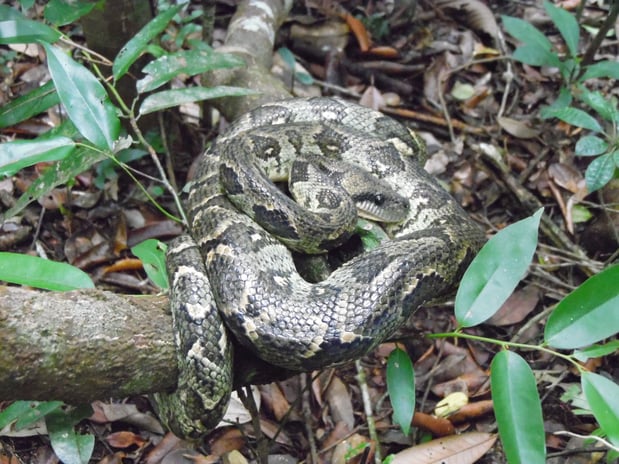 Madagascar Tree Boa © The Aspinall Foundation Madagascar
There are 5 species of snake likely to occur in the area and the Madagascar Giant Hognose Snake, known locally as Menarana is one of the most observed species. However, during the survey period our team didn’t observe any as the temperature had dropped and Menarana burrow deep underground into the substrate or leaf litter to insulate themselves when it is cold. The Madagascar Tree Boa, known as Mandotra, is the second most observed species. The other 3 species likely to occur at the project site are Madagascar Ground Boa, Malagasy Leaf-nosed Snake and Brigophys, though no confirmed observation of them has been made in the area in the past ten years. The most known threat to snake species is people killing them, often due to fear and the false belief the snakes will kill people. There is also deep-rooted local folklore, including snakes breast-feeding on humans.
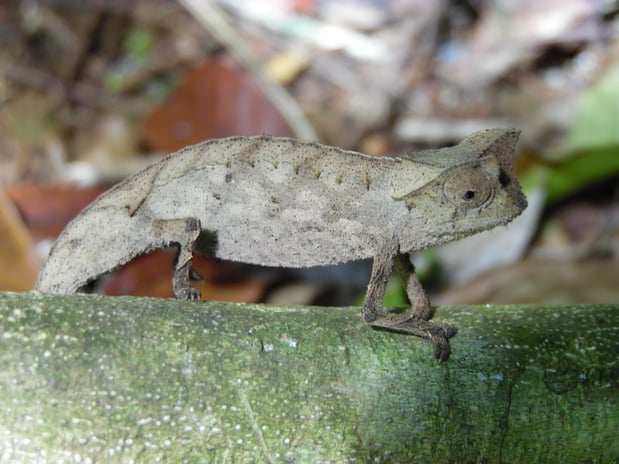
Brown Leaf Chameleon © The Aspinall Foundation Madagascar
Madagascar is home to different sizes and species of chameleon, from the biggest to the smallest chameleon in the world. One of the chameleon species observed during the survey is the Brown Leaf Chameleon. Two species of brown leaf chameleon are likely to occur in the area. Because of their size and perfect camouflage, they are challenging to spot, making it very difficult to establish the population abundance and occurrence. Though classified as LC by the IUCN Red List of species, the population is declining and their numbers have decreased as they are very sensitive to micro-climate change and they require undisturbed forest floors to survive. Apart from chameleon, some individuals of amphiglosus, geckos and lizards were also recorded.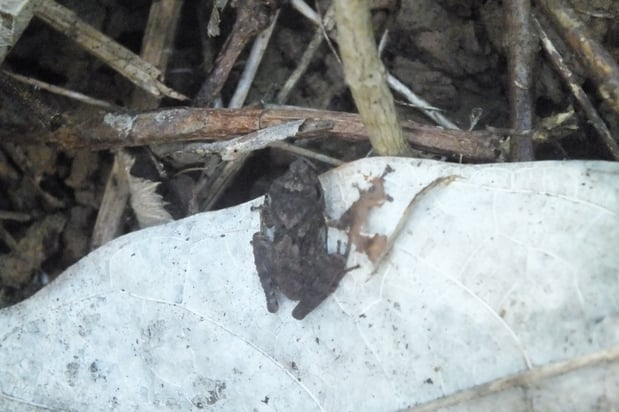
Boulenger's Madagascar Frog © The Aspinall Foundation Madagascar
At least five species of frogs, a diverse and largely semiaquatic group of short-bodied, tailless amphibian vertebrates, were observed during the surveys. The Rapid Biological Assessment conducted in 1999 had previously identified 3 species of frog in the area so this survey has helped to increase knowledge on which species are present. The Andriantantely forest itself is currently known to host 42 described amphibian species, grouped in four families: Mantellid frogs, Tree frogs, Narrow-mouthed frogs and Reed frogs. Frogs are threatened by habitat loss (especially Tree frogs) and habitat competition (Reed frogs) with humans converting the landscape to their own advantage.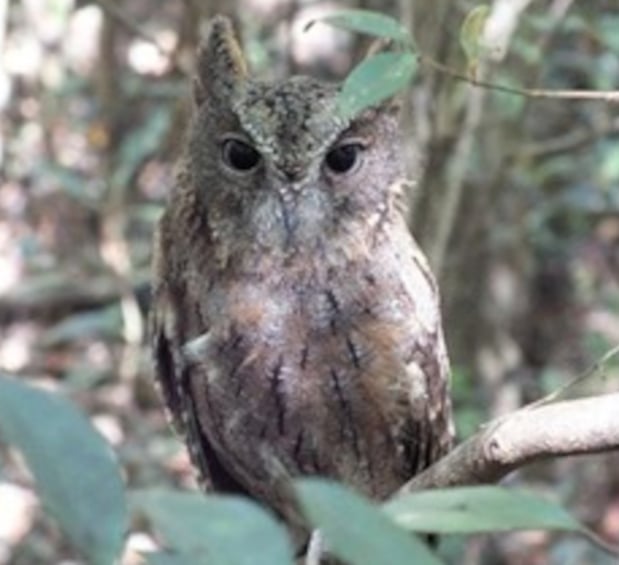 Madagascar Scops Owl © The Aspinall Foundation Madagascar
Bird species recorded included the Madagascar harrier-hawk, the Madagascar scops owl, the Madagascar crested ibis, the cuckoo roller, and the Madagascar sparrow hawk. Past inventories identified around 60 species of bird. Though Madagascar Harrier-hawk is classified as LC, extreme deforestation could be a huge problem for this species in the long-term. Also classified as LC, the Madagascar Scops-owl doesn’t encounter direct threats. However, as they are feeding on beetles, moths and small vertebrates, the use of insecticides and pesticides might affect their life in the long term. The Madagascar Crested Ibis is also threatened by hunting and trapping.
 Fire Millipede © The Aspinall Foundation Madagascar
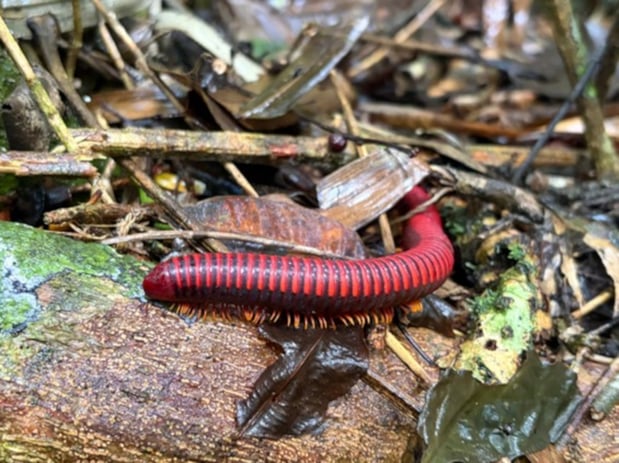
In common with most of Madagascar, very little is known about invertebrates occurring in the Andriantantely lowland, although they play a vital role in the forest structure. For example, fire millipedes are a key part of the forest's floor ecosystem, acting as vital decomposers, breaking down organic matter and recycling essential nutrients back into the soil. If the delicate balance and microclimate of this specific littoral and lowland forest are destroyed, unique species perfectly adapted to its soil and leaf litter can easily become extinct. (IUCN SOS). Insects are threatened by the increased use of chemical pesticides, herbicides and fertilizer in the agricultural fields. Competition and invasion are also to be feared with the recent development of lombri-compost using exotic species.
The Connection between Ecosystems & Climate Change Resilience
Healthy and biodiverse ecosystems play a crucial role in building resilience to climate change. When an ecosystem is functioning at optimum capacity it can absorb, resist, and hopefully recover, from climate disruption such as droughts, storms, or warming temperatures.
Human populations cannot exist in a vacuum. Whilst some societies are more immediately dependent on ecosystem services than others there is a universal need to build resilience to climate change which can only be achieved by supporting and stabilising ecosystems across the world that have become increasingly vulnerable due to unsustainable human activities.
This project, together with others we are working on in Madagascar, has been designed to support, stabilise and improve natural ecosystems and local populations simultaneously.
We look forward to bringing you more updates on this, and other elements of the project over the coming months. In the meantime, we would like to thank CEPF for their support and collaboration.
The Critical Ecosystem Partnership Fund is a joint initiative of l’Agence Française de Développement, Conservation International, the European Union, the Fondation Hans Wilsdorf, the Global Environment Facility, the Government of Canada, the Government of Japan and the World Bank. A fundamental goal is to ensure civil society is engaged in biodiversity conservation.